 Bike Stories
Kids' bikes: five things worth paying for
A kids' bike spec sheet is full of features, and most of them are marketing. Five of them are real, and every one takes a minute to check in the shop.
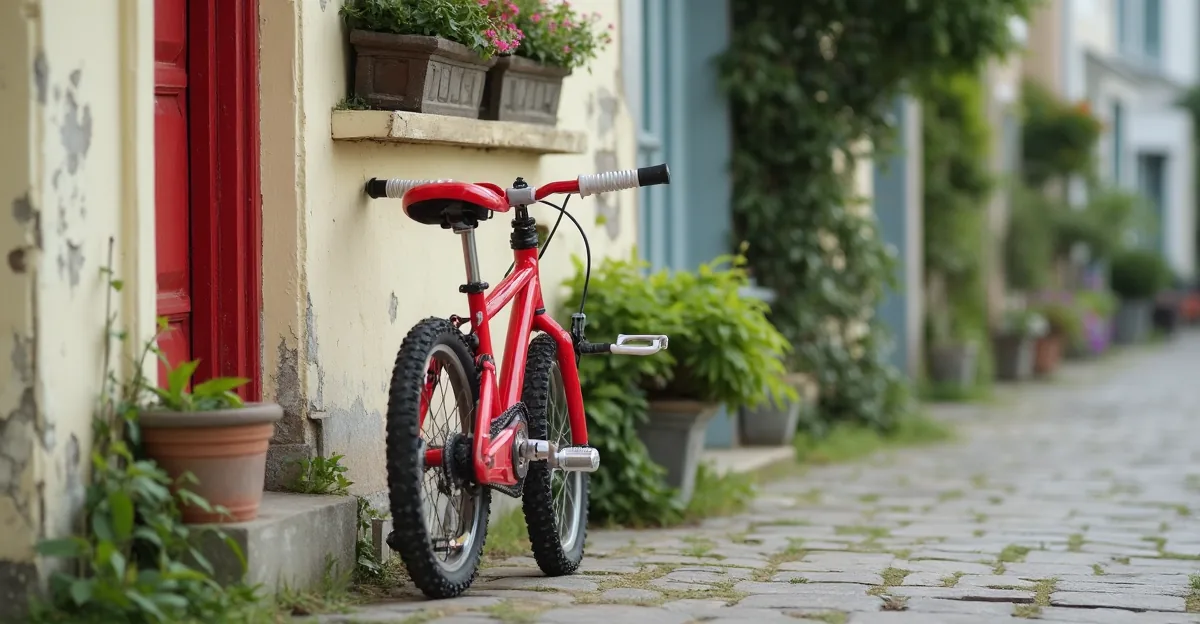
You are standing in a bike shop, or scrolling a listing at night, and the bike you want carries a spec sheet: 21 speeds, a suspension fork, a bell, a basket, a light, and graphics of something fast. The price climbs with every one of them.
Most of that list is not the child's bike — it is the box. Five features are real, and all five check in a minute — read a number, or put the child on the bike. If you still need the measurements — inseam, standover, the brake check — the sizing post has them; this one is about what to pay for.
What is worth paying for: five things you can check
1. A low weight
Bike weight is the spec most often left off the label, and the one the child feels every ride. The figure usually quoted is that a child's bike should stay under about 30–40% of the child's body weight, and lower is better.
The market spread on the same wheel size is enormous:
| 16-inch segment | Typical weight |
|---|---|
| Lightest specialist bikes | about 5–6 kg (11–13 lb) |
| Mainstream shop and supermarket bikes | about 8–11 kg (18–24 lb) |
Those are segment ranges, and some bikes sit between the two bands; the spread is why the same 16-inch wheel comes at very different prices. Run the number against the child, not against other bikes: an 18 kg (40 lb) child on a 7 kg (15 lb) bike is at 39% — just inside the top of the range — and on a 10 kg (22 lb) one at 56%. Against that child, the whole mainstream band sits above the 30–40% line, so the rule works as a direction to move in and a way to compare two bikes of the same size, not as a pass/fail stamp — and the lighter bike in a size is the one to take.
What the extra weight costs is control at low speed: starting, stopping, holding the bike up, and catching it when it tips. The check: read the stated weight. If the listing does not state one, ask — and a bathroom scale settles it.
2. Brakes a small hand can actually operate
The property to check is not the brake type — it is whether the child's hand can stop the bike. Two fingers, a hard squeeze, and the wheel should stop before the lever reaches the grip, whichever brake type the bike has.
The reach screw at the lever pivot moves the lever toward the bar, and you wind it in before you call a bike wrong — a bike set for an adult hand can look unrideable until that one screw is turned. If the lever still meets the grip after the reach is set, the cable needs taking up, and that is a shop job, not a guess. The full brake check is in the sizing post.
3. A frame sized for today, with room in the post and stem
The checkable property here is a fit for this child, now: both feet down from the saddle, hands on the bars, fingers on the levers. What is worth paying for is the adjustment range the frame already has — a seatpost with enough travel, a stem that can be adjusted or swapped. The growing room belongs in the seatpost and the stem, not in a frame two sizes up, because a frame two sizes up is a bike the child cannot put a foot down on and cannot brake. The sizing post has the measurement; the spending conclusion: pay for the right size with travel, not for growth.
4. Tyres that fit the riding
If the child rides smooth paths and pavement, a smooth or light-tread tyre is right; if the child is in parks, sand and gravel, the bike wants proper knobby tread and matching width. The check is visual: match the tread and the sidewall width to where the child actually rides. A knobby tyre on pavement is rolling resistance with no benefit, and a smooth tyre in a sandpit is the same mistake the other way. Whatever the choice, the pressure number the sidewall prints is a maximum or a range, not a pressure for a light child — treat it as a ceiling, and a shop can advise what to run.
5. A drivetrain that shifts cleanly
The checkable property is whether the gears the bike actually has shift. Lift the rear wheel, turn the cranks, and shift through every gear: the shifter should work through the whole range, and the chain should run quietly and true as it goes. Worth paying for here is a drivetrain that does that, not the speed count on the box.
Most 12- and 16-inch bikes are single speed, and that is what a young child wants. For an older child on a 20- or 24-inch bike, a handful of wide-range gears is a normal setup, and the check above is the one that separates a drivetrain that shifts from one that doesn't.
In some markets small bikes come with a coaster brake — the brake works by pedalling backwards. It is not a defect, but it changes how the bike feels and what a shop has to service, so know which one you are buying.
What doesn't matter — and why it is easy to be sold on
The rest of the spec sheet. Each of these is easy to be sold on for a reason; none of them changes whether the child can stop, balance and enjoy the bike.
- The brand and the graphics. The child's attention is on the picture, not the parts list; the weight and the brakes do not change with the paint.
- The speed count on the box. A 21-speed label is a marketing number; the check is the one in item 5, on the gears the bike actually has.
- A suspension fork on a small bike. Weight the child has to control at speeds where it does almost nothing; item 1's rule already prices it.
- "Premium" frame material for its own sake. The checkable thing is the weight on the scale, not the alloy in the brochure.
- Bundled accessories. Bell, basket, light, stabilisers — convenient, and each is weight the child carries; most can be bought later when actually wanted.
- The age printed on the box. Sizing charts sold by age are marketing, and the inseam-to-wheel charts differ between US and European makers. The measurement is the same everywhere; the numbers around it are not.
Two children, two shopping lists
The five checks are the same for both; the list they carry is not.
A young child on a 12- or 16-inch bike. Weight and brakes carry most of the decision: the lighter bike the child can brake is the bike, and a single speed is what this size wants. The frame is sized for today's inseam, not next autumn.
An older child, about seven to ten, on a 20- or 24-inch bike. Gearing earns a place, so run the drivetrain check in item 5. The weight rule applies as much as ever — check the stated weight against the 30–40% figure, take the lighter bike — and brake reach still catches a small-framed child, so the lever check runs even when the frame obviously fits.
Where the growing room belongs
The seatpost and the stem, and nothing else. The frame is sized so the child can put both feet down and reach the levers today; the post and the stem are how the bike keeps fitting as the child gets taller. A child who cannot put a foot down cannot stop a bike that starts to move, and a child whose hands cannot reach the levers cannot stop one that is going.
This is also where a written number helps: the child's inseam and the saddle and stem settings are the kind of figures that are easy to have at the time and impossible to recall in six months, and they tell you when the bike has stopped fitting. A notebook, a note in the phone, a sticker on the frame — any of these works. A log like Bike Stories keeps a record for each bike you own, with the reference setup sheet for those settings and the documents — receipts, the warranty — alongside it, so when the next child rides the bike the history travels with it.
The short version
Carry this into the shop:
- Weight: under about 30–40% of the child's body weight; in any given size, take the lighter bike.
- Brakes: the child's own two-finger squeeze stops the wheel before the lever reaches the grip — wind in the reach screw first, and a shop takes up the cable if it is not enough.
- Fit: both feet down from the saddle, hands on the bars, fingers on the levers — for this child, today.
- Tyres: tread and width matched to where the child actually rides; the sidewall number is a ceiling, and a shop advises what to run.
- Gears: the shifter works through the whole range and the chain runs quietly; a single speed is fine for a young child.
- Skip: the extra gears, the suspension fork, the brand, the accessories, and the age on the box.
Common questions
Are expensive kids' bikes worth the extra money?
Weight is one of the things the price buys on a kids' bike. The lightest 16-inch bikes run about 5-6 kg (11-13 lb) and the mainstream ones about 8-11 kg (18-24 lb), and the child feels the difference in starting, stopping and catching the bike when it tips. If the lighter bike passes the other checks — the child can reach and squeeze the brakes, and the frame size is right for today, not next year — the extra is worth paying. If it fails one of those checks, the cheaper bike that actually fits is the better purchase.
How many gears does a kid's bike need?
Fewer than the box suggests. Most 12- and 16-inch bikes are single speed, and that is what a young child wants. On a 20- or 24-inch bike for an older child, a handful of wide-range gears is the usual setup, and the check is that the shifter works through the whole range and the chain runs quietly. A 21-speed label on a small bike is a marketing number, not a spec to buy by.
Should I buy a bigger bike so my child can grow into it?
No. A child who cannot put a foot down, or who cannot reach the brake levers, cannot stop the bike. The growing room belongs in the seatpost and the stem, not in a frame two sizes up: buy the size that fits today and use the post's adjustment range for the growth over the coming year. The inseam measurement is in the sizing post; it is the same question whatever age the box prints.
Drafted with AI, then reviewed and edited by Robert Jensen before publishing.
Stop guessing when you last did that
Bike Stories keeps the service history, the parts, the mileage and the real cost of every bike you own — on your iPhone, with no account. Free for two bikes; Pro is a one-time $9.99 unlock.

Keep reading
A child's first pedal bike: balance bike or stabilisers
There are three routes to a child's first pedal bike, and two of them are a detour. The one that keeps working starts with two wheels and no pedals.
What size bike a kid actually needs — inseam and standover, not age
Age charts sell bikes; they do not fit them. What decides the size is the child's inseam, the standover gap, and whether they can reach and squeeze the brake levers.