 Bike Stories
What size bike a kid actually needs — inseam and standover, not age
Age charts sell bikes; they do not fit them. What decides the size is the child's inseam, the standover gap, and whether they can reach and squeeze the brake levers.
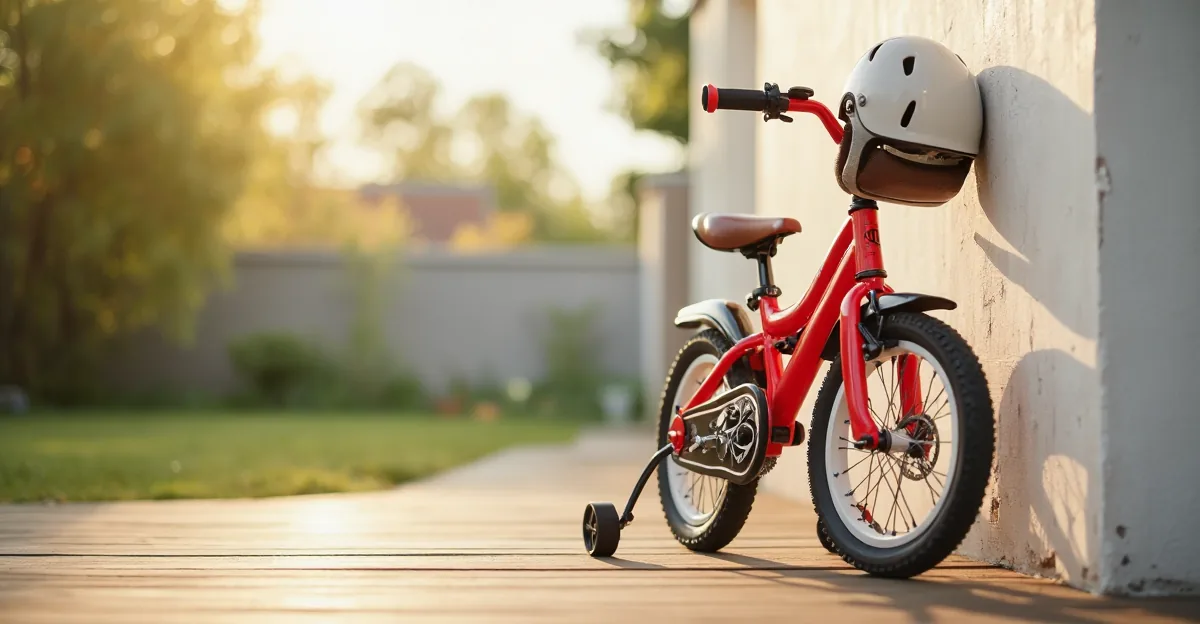
You are in a bike shop, or scrolling a second-hand listing, and the box says "ages 4–8". Your child is five. The box says the bike fits. The box has never met your child.
Most five-year-olds do end up on a 16-inch wheel, and most nine-year-olds on a 24. But "most" is doing a great deal of work in that sentence, and the three checks that settle it — inseam, standover, brake reach — take about as long as reading the box.
Start with the chart, then stop trusting it
Wheel size is a shortlist, not an answer. Matched against the child rather than their birthday, it is a useful one:
| Wheel size | Age (typical) | Height | Inseam |
|---|---|---|---|
| 12 in | 2–4 | 85–100 cm (2'10"–3'3") | 35–43 cm (14–17 in) |
| 14 in | 3–5 | 95–110 cm (3'1"–3'7") | 41–51 cm (16–20 in) |
| 16 in | 4–6 | 105–120 cm (3'5"–3'11") | 46–56 cm (18–22 in) |
| 20 in | 5–8 | 115–135 cm (3'9"–4'5") | 56–64 cm (22–25 in) |
| 24 in | 8–11 | 130–150 cm (4'3"–4'11") | 61–71 cm (24–28 in) |
Two warnings about that table. The ranges overlap, so a great many children sit legitimately in two rows at once — and these are US-market figures. European makers tend to run lower at the top of each range and offer 18-inch and 26-inch sizes the chart skips entirely, so a child the chart puts on a 20-inch may be on an 18 at a European brand. Use it to decide which bikes are worth measuring; then measure them.
Measure the inseam — then measure two things against it
Stand the child barefoot and straight against a wall, feet shoulder-width apart. Slide a flat book up between their legs until it rests firmly on the crotch — firmly, the way a saddle will — mark the top edge on the wall, and measure floor to mark. Take it standing, not crouching.
Two different things are measured against that number, and they get confused constantly.
Standover — about the frame
Stand the child over the frame, in front of the saddle, both feet flat. You want at least 5 cm (2 in) between the top tube and their crotch, and 5–10 cm (2–4 in) if they will ride anywhere off pavement, where they step off in a hurry on uneven ground. More clearance than that is not a problem on a child's bike; less is. If the top tube meets the crotch, the frame is too big, and nothing adjusts that.
Saddle height — about confidence
This one changes as the child improves:
- A beginner sits with both feet flat on the ground. Flat feet are what let a nervous rider stop without thinking.
- As they get confident, raise it a centimetre at a time, especially if they are struggling through the top of the pedal stroke.
- Once they are competent, set it so they touch down on the balls of their feet — where the leg extends properly and pedalling stops being hard work.
Check the bike's minimum saddle height against the inseam before buying. For feet-flat riding the lowest position has to sit at or below the inseam, and a couple of centimetres below is better. A frame that passes standover but whose saddle will not drop that far is still the wrong bike for a beginner.
The brake-reach check
This is the check the charts never cover, and the one that decides whether the child can stop.
Sit them on the bike, hands on the grips, and ask them to brake as if they mean it. A four- or five-year-old brakes with the whole hand, so the lever has to sit close enough that all four fingers wrap it; an older child on a bigger bike can use the two-finger grip adults use, index and middle, the rest still round the grip. Either way they must be able to squeeze hard without twisting the bars towards them, sliding their hand round, or coming off the saddle.
If they cannot, adjust before you conclude anything. Brake levers on most children's bikes sold through a bike shop have a reach-adjust screw at the pivot, a small Phillips or 2–3 mm Allen head; winding it in brings the lever closer to the bar. Then confirm the brake still bites well before the lever reaches the grip. If it now hits the grip, the cable needs taking up — worth handing to a shop, because brakes are the one system on a child's bike where a bodged adjustment has consequences.
What adjustment cannot fix is handlebar reach. If the child is still stretching with the levers wound all the way in, the distance from saddle to bars is beyond their arms. That is a frame problem, and the next size down is the right bike.
One country-specific note. US federal rules (16 CFR 1512) call a child's bike a "sidewalk bicycle" when its seat height, with the post raised all the way, is 635 mm (25 in) or less. One whose lowest seat height is 560 mm (22 in) or more must have a footbrake — the coaster brake you get by pedalling backwards — and none of them may be sold with hand brakes only. Hand brakes are still fitted to most of them, and where they are, the rule caps the lever's grip dimension at 76 mm (3 in) rather than the 89 mm (3.5 in) allowed on a full-size bike; the international standard for children's bicycles sets a comparable limit. So the reach check applies wherever you are buying. It is only on a bike with no hand brakes at all that the pedals are the whole story.
Why "buy big, they'll grow into it" is a safety problem
It is advice you will hear a lot, and the one piece to push back on hardest. A child who cannot put a foot down quickly, cannot reach the levers, and has to stretch to the bars is not learning to adapt. The margin between a controlled stop and a fall is measured in centimetres of reach and standover, and an oversized frame removes both at once. The growth-room argument works on adult bikes because an adult compensates with strength and reflexes; a five-year-old who is 2 cm short of the levers does not grow into that by the end of the summer, and every junction until then is a gamble.
Growing room belongs in the seatpost and in bars you can raise — the parts designed to be moved. A bike bought to fit, with the saddle raised over a couple of years, is the trade that works.
A worked example: a five-year-old
A child of 110 cm (3'7") and 18 kg (40 lb), inseam measured at 48 cm (19 in).
- Shortlist. 48 cm sits in the lower half of the 16-inch range and below the 20-inch one — so 16-inch bikes to try, and a 14-inch worth a look if they are still finding their balance.
- Standover. The top tube must be at 43 cm (17 in) or lower to leave 5 cm of clearance. Most 16-inch bikes clear that; most 20-inch bikes do not.
- Saddle. The lowest saddle position needs to be at or below 48 cm (19 in) for feet-flat riding, and a little under is better. Check the spec sheet, since some 16-inch bikes sit higher than that.
- Brakes. A firm squeeze with the whole hand, no twisting. If it fails, wind the reach screws in and try again before walking away.
- Weight. At 18 kg of child, a 7 kg (15 lb) bike is 39% of their body weight and a 10 kg (22 lb) one is 56%. Both exist with a 16-inch wheel.
The 16-inch bike is the call — not because a box says "ages 4–8", but because the inseam, the standover and the brake reach agree.
The weight check the label leaves off
Bike weight is a real, checkable spec, and the one the age label never mentions. The figure usually quoted is that a child's bike should stay under about a third of the child's body weight — 30–40% is the range you will see — and lower is better. It is a ratio no adult would tolerate: a 75 kg rider on a 10 kg bike is at 13%.
Plenty of bikes fail it, and the rule is still worth using, because the market spread is enormous. A light 16-inch bike from a bike shop is roughly 6.5–8 kg (14–18 lb); supermarket ones commonly run 9–11 kg (20–24 lb). What the extra weight costs a child is control at low speed — starting, stopping, holding the bike up at a standstill and catching it when it tips. If a listing does not state a weight, ask. "About 10 kg" is an answer; "not that heavy" is not.
How the checks change with the child
A three-year-old on a balance bike. Inseam and standover still apply, and feet-flat is the whole point. Brakes vary: plenty have none and are stopped with the feet, in which case skip the reach check — but many do have a rear hand brake, and where one is fitted it gets checked like any other.
A five- to seven-year-old on a pedal bike. Where the brake-reach check earns its place, with the whole hand rather than two fingers. The levers were set at the factory for nobody in particular, so expect to adjust them.
A nine-year-old on a geared 24-inch bike. Standover is rarely the problem by then and the weight rule gets harder to meet — a geared 24-inch bike is heavy for its rider, and lighter is worth paying for. Reach often still catches a small-framed child, so run the brake check even when the frame obviously fits.
When they have outgrown it
The signs arrive in order: the saddle is at its maximum and the leg still bends too much at the bottom of the stroke, the knees start coming up towards the bars, and the standover clearance has opened up well past the 5 cm you measured. That last one is the easy one to misread — a bike gets more standover clearance as the child grows, not less, and once there is a hand's width of it the frame is under them rather than around them.
And when the flat tyre does come — every kid's bike gets one eventually — the wheel is worth checking before you blame the technique: a rim with a lifted edge or a burr on the bead seat punishes every mount, and the same 'measure before you reject' logic applies there too, which is the whole point of the tyre-mount post.
Write down the inseam and the date each time you check, and the next decision is easy, including which child the bike moves to next. A notebook does this perfectly well, as does an app like Bike Stories, which keeps a reference setup sheet next to each bike's service history. What matters is that the number lives somewhere other than memory — a bike handed down twice usually arrives with a drivetrain nobody has thought about for either of those cycles, and the chain wear that ends a cassette is the same question whatever size the wheels are.
The short version
- Measure the inseam: child standing, book at the crotch, floor to book.
- Shortlist a wheel size from the inseam, not the age — and remember the chart is a US one.
- Standover: at least 5 cm of clearance, 5–10 cm off pavement.
- Saddle: the lowest position must be at or below the inseam; feet flat for a beginner, balls of the feet once competent.
- Brakes: a hard squeeze, no twisting. Wind the reach screws in before giving up on the bike.
- Weight: under about a third of the child's body weight if you can, and take the lighter bike in any given size.
- Growth room lives in the seatpost and the bar height, never the frame size.
A bike that fits now and gets handed on is the right trade. A bike that is almost right because the box said so is not.
Common questions
How do I know what size bike my child needs?
Measure the child's inseam rather than reading the age on the box: stand them barefoot against a wall, slide a flat book up to the crotch, and measure floor to book. Use that to shortlist a wheel size — roughly 46-56 cm (18-22 in) of inseam for a 16-inch bike, 56-64 cm (22-25 in) for a 20-inch — then check the bike itself. Standing over the frame, there should be at least 5 cm (2 in) between the top tube and their crotch, and the saddle must drop low enough for them to sit with both feet flat. Then check the brakes: they should be able to squeeze each lever hard without twisting the bars. If they cannot, try the lever's reach-adjust screw before deciding the bike is too big.
Should I buy a bike bigger so they grow into it?
No — on a child's bike this is a safety decision rather than a matter of taste. A frame that is too big means the child cannot get a foot down quickly, has to stretch to the bars, and often cannot reach the brake levers, so every emergency stop is slower and more likely to end badly. Growing room belongs in the seatpost and in handlebars you can raise, which are designed to be adjusted, not in a frame two sizes up. Buy the bike that fits now, raise the saddle as they grow, and accept that a well-chosen bike will be handed on rather than kept.
My child cannot reach the brake levers. Is the bike too big?
Not necessarily — check the adjustment first. Brake levers on most children's bikes sold through bike shops have a reach-adjust screw at the pivot, usually a small Phillips or 2-3 mm Allen head, and winding it in brings the lever closer to the bar. Adjust it until the child can get a firm grip, then squeeze to confirm the brake still bites well before the lever touches the grip; if it now hits the grip, the cable needs taking up, and that is worth handing to a shop, because brakes are the one system on a child's bike where a bad adjustment has real consequences. If the child still has to twist the bars or shift their grip with the lever wound all the way in, the handlebar reach is beyond them and the frame really is too big.
Does bike weight matter for a kid?
Yes, and it is the spec most often left off the label. The guidance usually quoted is that a child's bike should stay under about 30-40% of the child's body weight, and lower is better — a heavy bike is hard to hold up at a standstill, hard to catch when it tips, and hard to carry up a kerb or a flight of stairs. The market makes this a real choice: a light 16-inch bike from a bike shop is roughly 6.5-8 kg (14-18 lb) while supermarket ones commonly run 9-11 kg (20-24 lb), so two bikes of the same wheel size can differ by a third of the child's own weight. If a listing does not state the weight, ask, and be suspicious when the answer is vague.
Drafted with AI, then reviewed and edited by Robert Jensen before publishing.
Stop guessing when you last did that
Bike Stories keeps the service history, the parts, the mileage and the real cost of every bike you own — on your iPhone, with no account. Free for two bikes; Pro is a one-time $9.99 unlock.

Keep reading
A child's first pedal bike: balance bike or stabilisers
There are three routes to a child's first pedal bike, and two of them are a detour. The one that keeps working starts with two wheels and no pedals.
Bike wheel rattling: hub and bearing wear, checked in ten minutes
A wheel that wobbles or spins down fast has bearings, not a rim, at fault. Two checks take ten minutes, and the answer decides whether you need grease, a service, or a new hub.