 Bike Stories
Bike wheel rattling: hub and bearing wear, checked in ten minutes
A wheel that wobbles or spins down fast has bearings, not a rim, at fault. Two checks take ten minutes, and the answer decides whether you need grease, a service, or a new hub.
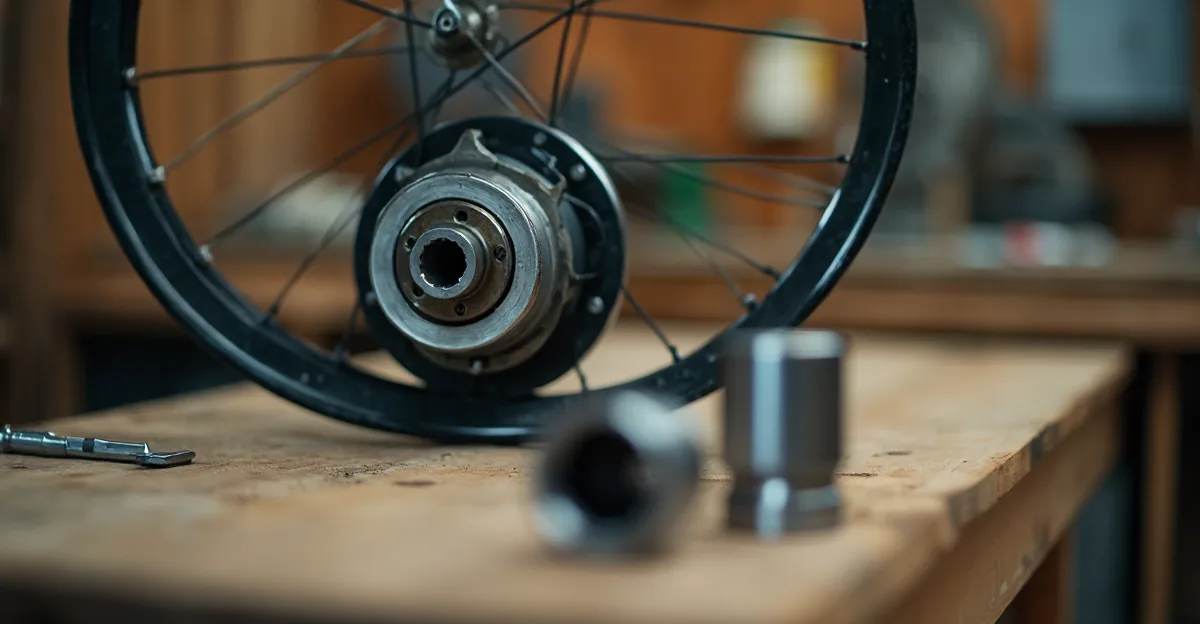
You have a wheel that wobbles. You have been riding with it for a week, or a month, and it has gone from a thing you notice to a thing you have stopped noticing, which is the worst kind of small problem. The fix is not a spoke wrench, and it is not a new wheel. It is two checks that take ten minutes and a decision about what the bearings are actually doing.
The wobble is in the bearings, not the rim
A wheel that wobbles side to side is a wheel that is not sitting square in the hub. The rim can be perfectly true and the wheel can still wobble, because the hub's bearings are what locate the wheel inside the frame. When the bearings go loose, the whole wheel, rim and spokes and all, sits in a slop around the axle, and that is the wobble you are feeling through the handlebars.
This is the mistake that costs people a new wheel: truing a rim that is fine, on a hub that is loose. The truing does not hold, because the wheel is moving inside the hub every time it rotates, and the spokes are being asked to hold a position the hub will not keep. The truing job is a spoke job. The wobble job is a bearing job. The two checks below tell you which one you have before any tools come out.
The two checks
Check one: the spin-down
Lift the wheel off the ground, give it a firm spin, and let it run out. Listen to it, and watch how long it takes to stop.
A healthy hub spins for a long time. You give it a flick and it is still turning a minute later, quiet and smooth. A worn hub slows quickly. You feel the resistance before you hear it, and the spin dies in two or three rotations instead of twenty.
The sound is the more useful signal. A tick, a click, or a low grind as the wheel slows is a ball rolling over a worn spot in the race, or a ball that has started to drop. A wheel that spins down fast and sounds rough is not a bearing that needs grease. It is a bearing that is at the end of its life, and the question is what to do about it.
Check two: the hand-roller
This is the check that catches wear the spin-down misses, and it is the one most people never do because it needs the wheel off the bike.
Take the wheel off. Hold the axle between your thumbs, about two finger widths from the hub flange, one thumb on each side. Now roll the axle between your thumbs, slow and deliberate. Do not press hard. Let your skin do the measuring.
A good hub rolls smooth. You can feel the balls in the bearing as they pass under your thumbs, and the roll is even, with no catches. A worn hub ticks. As a ball rolls over a pitted spot in the race, or a race that has a small flat worn into it, your thumb catches on it. One tick per rotation is a single worn ball or a small pit. A rough patch that lasts several rotations is a race that is properly gone, and a hard click that comes with a small drop is a ball that has dropped out of its race and is rolling on the outside of it.
The hand-roller is the check that tells you whether the bearing can be saved. A tick that comes and goes is often a single ball that has started to go, and the bearing can usually be cleaned and regreased, or the ball replaced, and run for another year or two. A rough patch that never stops is a race that is pitted, and the bearing is done. That is a replace, not a service.
What the checks rule out
The wobble test is the one that separates the bearings from the rim, and it is the check that stops the wrong repair from being done.
Look at the wheel spinning against a fixed point. The brake caliper is a good fixed point: hold the caliper still and watch the gap between the rim and the caliper as the wheel turns.
- Rim trueness. The rim wavers side to side and comes back. The gap opens and closes as the rim passes. This is a spoke problem, and it is fixed with a spoke wrench, not a bearing job. A trued wheel on a loose hub will not stay true, which is why the hub check comes first.
- Bearing play. The whole wheel, rim and all, sits in a slop around the axle. The gap to the caliper does not change as the rim rotates; the whole wheel moves as one. This is the bearings, and it is a service or a replace.
- Both. Some wheels have both, and the hub will be loose and the rim will be out of true. The hub gets fixed first, because the truing will not hold on a loose hub, and the rim gets trued second.
A wheel that wobbles only when you stand up out of the saddle is a separate case, and it is usually the rear hub or the dropout alignment, not the rim. The rear hub takes the drivetrain load and the pedalling force, and it wears differently from the front, so the check is the same but the answer is often a service on the rear and nothing on the front.
What a service and a replace actually look like
Most modern hubs take sealed bearings. The bearing is a single unit, pressed into the hub shell, with a seal on each side that keeps the grease in and the water out. The bearing is not a part you regrease in place. It comes out, it gets cleaned and packed with new grease, or it gets replaced, and it goes back in.
A bearing service is the job where the bearing comes out, gets cleaned, gets new grease, and goes back in. The seals are checked; if they are done, new seals go on. The job takes a shop an hour or less, and the cost is the labour plus the grease and the seals if needed. In the ballpark of 30-50 EUR (25-40 USD) at a typical bike shop, it is the one that makes sense when the bearing is loose but the race is still good, and the bearing will run for years after it.
A bearing replace is the job where the old bearing is pressed out and a new one is pressed in. The new bearing is a sealed unit, bought to match the old one's size, and pressed into the hub shell with a proper bearing press. A pressed-in bearing that is not concentric is a bearing that will bind, and a bearing press is a tool a shop has and you probably do not. The cost is the labour plus the bearing itself, which is a few euros for a common size, and the job is the same hour or less.
A cup-and-cone hub is the older style, and it is the one that lasts. The bearing is a set of balls and a race in a cup, and the cup is removable. A cup-and-cone hub with gritty bearings can be cleaned, regreased, and adjusted with the locknut, and it can be done again next year and the year after. The labour is cheap because the bearing itself is a few euros of balls and a race, and the hub is designed to be serviced for the life of the bike. If your hub is a cup-and-cone, the answer to a gritty spin-down is almost always a service, not a replace.
The bearing standards, so you can buy the right one
Most modern sealed bike hubs take bearings from a small set of standard sizes, and the number is the bearing's identity, not a guess.
| Bearing | Inner | Outer | Width | Typical on |
|---|---|---|---|---|
| 6902 | 15 mm | 37 mm | 14 mm | Most road, hybrid and mountain hubs |
| 6802 | 15 mm | 35 mm | 16 mm | Some road and gravel hubs |
| 6900 | 10 mm | 26 mm | 8 mm | Smaller hubs |
The inner diameter is the axle's diameter, the outer is the hub shell's bore, and the width is how deep the bearing sits in the hub. A 6902 will not fit where a 6802 goes, because the outer is 2 mm different, and a bearing pressed in at the wrong size is a hub that is now permanently out of spec. When you buy a replacement, match the number, not the brand.
A thread-on locknut hub takes the bearing in a cup that unscrews from the hub shell, and the bearing is swapped by hand. A press-fit hub has the bearing pressed into the shell, and the bearing comes out with a proper press or a drift punch of the right size. The shop knows which one you have in a minute, and the check above tells you whether you are ordering a service or a replace before you call.
The warning sign the headset is wearing it
A worn hub bearing does not fail in isolation. The load it was carrying moves to the next bearing in line, which is the headset, and the headset wears the way the hub did, quietly, until it is gone.
A headset that has taken the load a hub bearing was meant to carry will start to feel like the handlebar is moving in the steering, a small play that is not there when the brake is on and is obvious when you stand up and put weight on the bars. If the hub check above is clean but the steering feels loose, the headset is the next thing to check, and the headset service is a similar job: the bearings come out, get cleaned and regreased or replaced, and the pre-load is set so there is no play but no bind. A loose headset is a steering issue, and steering is the one system on a bike where a home fix done wrong is a real problem, so the honest answer for the headset is a shop, or a torque wrench and the service manual the fork or headset manufacturer publishes, and the pre-load set to that spec.
A hub that has been running loose for a season is a hub that has been feeding load to the headset all season. The check that catches it early is the one above, and the reason to do it every few months rather than when the wobble is loud is that the headset is the part that does not tell you it is wearing. The same 'fix the hub before the truing' logic runs the other way through the wheel: a hub that has been loose long enough to feel rough is a hub that has been letting the rim wander, and the tyre post covers what a rim that has wandered does to the tyre before the wobble ever shows up in the steering.
The short version
The ten-minute routine, every few months or before a long trip:
- Spin the wheel. Lift it off the ground, give it a firm spin, listen. A long, quiet spin is a good hub. A fast, rough spin-down is a bearing at the end of its life.
- Run the hand-roller. Wheel off, axle between your thumbs, roll slow. Smooth is good. A tick is a single worn ball or a small pit, serviceable. A rough patch that never stops is a pitted race, and the bearing is done.
- Do the wobble test. Spin against the caliper. Rim wavering is a spoke job. The whole wheel in a slop is a bearing job. Both is a bearing job first, then a spoke job.
- Decide service versus replace. Sealed bearing with a tick: service. Pitted race: replace. Cup-and-cone: service, and again next year.
- Check the headset. If the steering feels loose and the hubs check out clean, the headset is wearing the load the hub was meant to carry, and that is a shop job, not a weekend one.
The bearing is the part that feels like the bike, and it is the part that wears in silence. The check is ten minutes and costs nothing, and the decision it leads to is a labour bill you can budget for rather than a wheel you did not know was about to go. If you have a bike you are keeping for a long time, the date you last did this check is the kind of thing a maintenance log keeps next to the rest of the bike's history, and a note on the hub and the bearing size means the next service is a part number, not a guess. A sticker on the seat tube works just as well, and costs nothing. Bike Stories does it with a per-bike parts list and local reminders, but the notebook version works too — the point is that the number lives somewhere other than memory.
Common questions
How do I know if my bike's hub bearings are worn?
Two checks. First, lift the wheel and spin it: a healthy hub spins for a long time and sounds quiet, while a worn one slows quickly or makes a tick or grind. Second, hold the axle between your thumbs, about two finger widths from the hub flange, and roll it slowly between your thumbs. A tick or a gritty patch as the balls roll over a worn spot is bearing wear; smooth means the hub is fine. If the wheel also wobbles side to side against a fixed point like the brake caliper, check whether the whole wheel sits in a slop (bearings) or the rim itself is out of true (a spoke problem) — the first is this post, the second is a truing job.
Is it worth paying a shop to service hub bearings?
Often, and the maths are simple. A bearing service, in the ballpark of 30-50 EUR (25-40 USD) for labour and parts at a typical bike shop, buys back the wheel spinning for years, and a new sealed bearing pressed in is a similar or slightly higher job. If the hub is a common cup-and-cone, the labour alone is cheap because the bearing itself is a few euros of grease and a bearing set that lasts years. What is not worth paying is a full wheel rebuild for a wobble that is just the rim: that is a truing job, not a bearing job, and it should cost less.
What bearing sizes do most bike hubs use?
Most modern sealed bike hubs run one of a few standard sizes: 6902 bearings on a lot of road, hybrid and mountain hubs, and 6900 on smaller hubs. The number is the bearing's identity, not a guess — 6902 is 15 mm inner, 37 mm outer, 14 mm wide; 6900 is 10 mm inner, 26 mm outer, 8 mm wide. If the hub takes a pressed bearing, the shop can press the new one in; if it is a thread-on locknut hub, the bearings sit in a cup and are swapped out by hand. When you buy a replacement bearing, match the number to the old one, not the brand, and buy one for each side of the hub you are replacing.
My bike wobbles at speed. Are the bearings the problem?
Usually not, and this is the check that separates three different repairs. A wobble that gets worse at speed and settles when you brake is most often the rim being out of true, which a spoke wrench fixes in half an hour. A wobble that is present at low speed too, where the whole wheel sits in a slop around the axle, is the bearings, and that is a service or a replace. A wobble that only shows up when you stand up out of the saddle and the load shifts to the rear hub is usually the rear bearings or the dropout alignment. The spin-down and hand-roller checks above separate the three before any parts are ordered.
Drafted with AI, then reviewed and edited by Robert Jensen before publishing.
Stop guessing when you last did that
Bike Stories keeps the service history, the parts, the mileage and the real cost of every bike you own — on your iPhone, with no account. Free for two bikes; Pro is a one-time $9.99 unlock.

Keep reading
A child's first pedal bike: balance bike or stabilisers
There are three routes to a child's first pedal bike, and two of them are a detour. The one that keeps working starts with two wheels and no pedals.
What size bike a kid actually needs — inseam and standover, not age
Age charts sell bikes; they do not fit them. What decides the size is the child's inseam, the standover gap, and whether they can reach and squeeze the brake levers.