 Bike Stories
Winter riding: what salt and grit destroy first on your bike
Winter riding is not that bad for you, and it rarely takes the bike with it — it wears down a short list of consumables, and the order they meet the winter is what you inspect first.
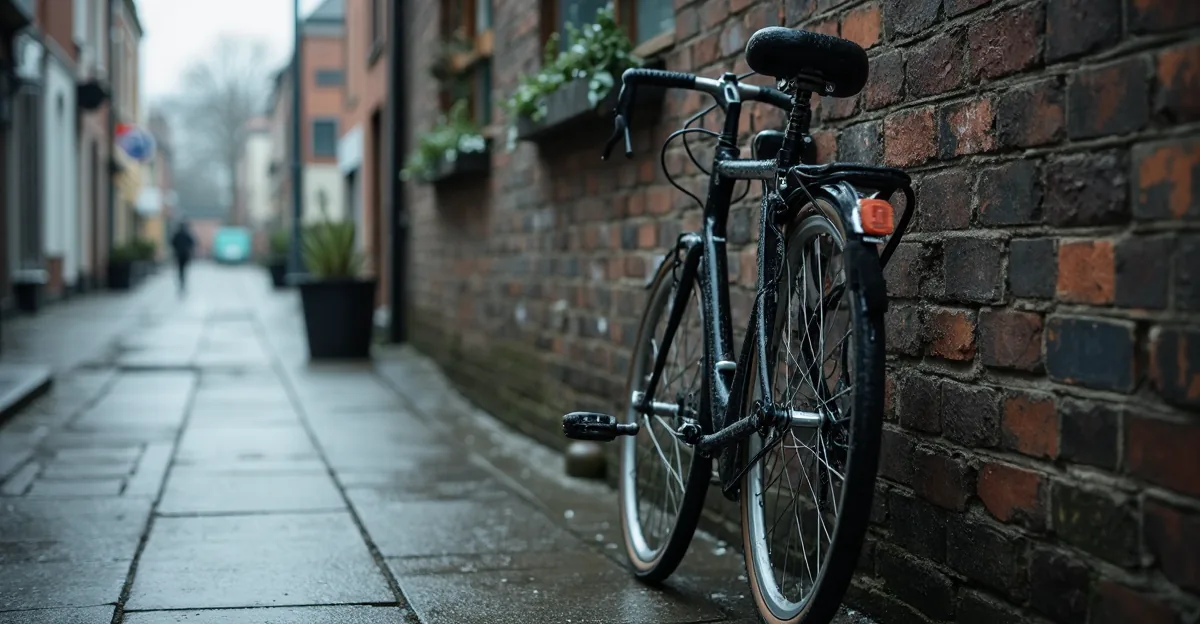
"Is winter riding that bad?" is the question a lot of riders ask themselves when the weather turns. The honest answer: the riding itself is not that bad. The damage is not to the bike as a whole — it is to a short list of consumables, in the order they meet the winter. Once you know that order, winter becomes a short inspection list instead of a vague worry.
The other question — "do I need a new bike for winter commuting, or can I make this work?" — gets a straight answer further down. If your bike looks rough after a month of wet, salty roads — salt crusted in the spokes, a grey film on the frame — that is normal, and recoverable. This post is about making next winter cost less, not fixing a bike that has already been through one.
Why salt and grit do different damage
Road salt is two kinds of damage, not one. Salt water is an electrolyte, and dissolved salt makes corrosion happen faster on any exposed steel or aluminium. Where two different metals touch — a steel bolt into an aluminium frame, for instance — that corrosion can run as galvanic corrosion, and it is the usual suspect behind a bolt or seatpost that freezes solid after a winter.
Grit is the other half, and it is mechanical. It grinds surfaces that move against each other: the pins and rollers of a chain, the pad against the rotor, and on rim brakes the pad against the rim's braking surface. The chain-lube post covers the chain side — grit is the thing that wears the chain — and the same logic applies to the pads and the rim.
The rest is done by water forced past seals: front-wheel spray drives salt water into bearings and into cable ends, and a pressure jet can do in a minute what a month of riding never could.
One variable belongs to your roads, not your bike: what they are treated with, and how heavily. Rock salt and liquid brines are common in northern Europe and North America; some regions use other products, and some treat lightly or not at all. How bad winter is depends, in part, on your postcode.
The order things wear out in
Check parts in this order. It is not a claim that one part always fails first; it is the order of how quickly each one sees the winter, and it tells you what to look at first and what to leave until spring.
| Part | What gets it | What you notice | What to do |
|---|---|---|---|
| Chain, cassette, chainring | Grit abrasion plus corrosion | Noise, late shifting, a checker that reads high | Check with a chain checker: 0.5% for 11–13 speed, 0.75% for 8–10 speed; the set-replacement logic when past the limit |
| Brake pads (and the rim braking surface, on rim brakes) | Grit ground between pad and rotor, or pad and rim | Longer stopping distance, squeal, a scored or shiny pad face | Check against the minimum stamped on the pad; in doubt, the shop |
| Inner cables | Salt water inside the housing | Stiff or gritty shifting, a spongy brake | Replace the inner cable — salt gets in at the ends; wiping does not get it out |
| Hub, headset, bottom-bracket bearings | Spray driven past the seals | Roughness, wobble, a click or a grind | The ten-minute bearing checks — service or shop, not a guess |
| Bolts and the seatpost | Dissimilar metals plus salt | A bolt that will not move, a sticky seatpost | Grease the threads and post, torque with a wrench to spec; a stuck post is a shop job |
| Paint, bar tape, exposed aluminium | Salt film and winter sun | White spotting, a chalky finish | Cosmetic — wash it off in spring and live with it |
The chain row deserves the most attention. A chain stretches with wear — the checker measures that elongation — and a chain run past its limit spends its remaining life wearing the cassette and the chainring. Winter shortens the interval, but the checker, not the calendar, decides when the chain is due.
The brake row is the safety-critical one on the table: if you are not confident about pad or rotor condition — or contamination you cannot clean — a shop is the right answer.
What actually slows it down
- Fit full mudguards. A set stops the front-wheel spray reaching the drivetrain and the rear brake — one of the most effective single changes you can make to a bike that takes the winter. A given on most European commuter bikes; an afterthought on a road bike you ride in winter.
- Rinse with plain low-pressure water after a salty ride, before the salt dries into a film. Do not blast the bearings with a pressure jet: it forces water and grit past the seals.
- Dry the chain, then lube for the conditions. A wet chain dries into a paste of grit, and lube on top of it is doing the opposite of its job. Wet conditions generally want a wet lube, and gritty conditions mean wiping the chain clean more often; the chain-lube post has the reasoning.
- Grease the seatpost, the pedal threads, and the bolts that will not come off in spring. A thin film on the post and threaded inserts is the difference between a quick adjustment and a long fight with penetrating oil. On carbon parts, use the paste the part's maker recommends and follow their instructions, not a generic anti-seize.
- Store the bike dry, away from heat. A wet bike dried against a radiator still has the salt on it, and salt left on the metal keeps working. Rinse it first.
- Clean the brakes, and keep the lube away from them. A wipe of the rotors and pads with a dedicated brake cleaner after a dirty ride is the difference between a brake that works in the rain and one that grabs. Lube on a pad is contamination that does not wash out — the pad has to be replaced.
- Give the tyres a look, but do not chase a number. Cold and wet both cut grip, and a slightly wider tyre and a slightly lower pressure often help. The right winter pressure is a feel, not a figure — the one that still stops you.
Do you need a new bike for winter?
Usually, no. A good bike, kept dry and ridden with mudguards, comes out of a winter rougher than it went in — but it comes out.
The decision rests on three variables: how much salt your roads actually see (a lightly gritted lane is not a problem; a main road salted daily is), how far you ride (a short regular commute adds up fast over the season; an occasional weekend ride does not), and how much your good bike is worth to you (a bike you would be upset to see scratched is a different case from one you bought for the job).
If the three point the same way — salted roads, long regular distances, a bike you do not want to see take it — a cheap, simple second bike is a legitimate answer, not a compromise: full mudguards, a hub gear or a single speed with an enclosed chain, few parts for salt to get into. It is a cost-per-kilometre decision: the winter bike wears out chains and tyres faster, but on a bike that cost a fraction of the price.
The counterpoint: a second bike is not free of maintenance. It wants the same rinse, the same chain check, the same bearing checks. What it changes is which bike the wear is on, not how much wear there is. If you are not going to keep up the second bike's service, the good bike, kept dry and rinsed, is the better answer.
Keeping a winter service clock
"When did I fit this chain?" is a question almost nobody can answer in kilometres, and "how many winter kilometres has it done since then?" is the one that decides whether the chain is due. Write it down, and the decision becomes a lookup.
A notebook does this perfectly well. So does a spreadsheet. So does a sticker on the seat tube. What a log gets you that memory does not is the number itself — the distance since the part was fitted.
An iPhone app like Bike Stories does the same job: it logs the distance since a part was fitted against the expected life you set, so you can set a shorter life for a winter commuter chain and watch it count down. The figure it gives you is distance ridden since fitting, not a measurement of the chain or the pads — the chain checker still decides. The log tells you when to put the checker on the chain; the checker tells you when the chain is done.
If you ride indoors for the winter
If you move the riding indoors for the coldest weeks, the one thing a trainer does that the road does not is bring sweat onto the bike. Sweat is salty, and it drips onto the stem, the bars, and the top tube — exactly where the winter already puts salt — so the wipe-down after a session is not optional. The drivetrain still needs lube and an occasional wipe: a chain on a trainer still gets sweat, and there is no rain to wash it off, but there is no road grit or salt, so it wears more slowly than on a winter commute.
The short version
Before the season:
- Full mudguards on the bike that takes the winter
- Grease the seatpost, the pedal threads, and the bolts that stick
- A new chain if the last one has been through a season
- Pads checked against the minimum stamped on them — new ones if you are not confident
After a salty ride, through the winter:
- Rinse with plain low-pressure water — do not blast the bearings
- Dry the chain, and lube it for the conditions
- Check the chain with the checker; the set-replacement logic when it reads past the limit
- Wipe the rotors and the pads, and keep the lube away from the brakes
In spring:
- A full clean, with a proper degreaser on the drivetrain
- A bearing check on the hubs, the headset, and the bottom bracket
- A look at the paint, the bar tape, and the exposed aluminium — a decision on what is worth repainting
Common questions
Do I need a separate bike for winter commuting?
Usually no. The decision rests on three variables: how much salt your roads actually see, how far you ride, and how much your good bike is worth to you. If the roads are salted most of the season, you ride long regular distances, and the main bike is one you would be upset to see scratched and pitted, then a cheap, simple second bike — full mudguards, a hub gear or a single speed with an enclosed chain — is a legitimate answer. It puts the winter wear on parts that cost a fraction of the price. The honest counterpoint is that a second bike is not free of maintenance: it wants the same rinse, the same chain check, and the same bearing checks. If you are not going to keep up the second bike's service, the good bike, kept dry and rinsed, is the better answer.
Is road salt really bad for a bike?
Yes, and in two different ways. Salt water is an electrolyte, and dissolved salt makes corrosion happen faster on any exposed steel or aluminium; where two different metals touch, that corrosion can run as galvanic corrosion, and it is the usual suspect behind a bolt or a seatpost that freezes solid after a winter. Grit is the other half, and it is mechanical: sand and grit are abrasives, and they grind surfaces that move against each other — the pins and rollers of a chain, the pad against the rotor, and on a rim brake the pad against the rim's braking surface. The damage follows a predictable order, and it is slowable: a low-pressure rinse after a salty ride, the chain dried and lubed for the conditions, the seatpost and bolts greased, and the bike stored dry. How bad winter is also depends on what your roads are treated with and how heavily, which varies a lot by region.
How often should I rinse my bike in winter?
There is no universal number, and the conditions decide it. The practical rule is to rinse after a ride that met salt, or when the bike is visibly salt-crusted — on a salted road that can mean most rides, and on an unsalted lane it can mean almost never. Use plain low-pressure water, and do not aim a pressure jet at the bearings, because it forces water and grit past the seals. Dry the chain after the rinse, then lube it for the conditions the ride met. The chain-lube post in the blog has the proper clean, and the short rinse step in it is the one for salt.
Drafted with AI, then reviewed and edited by Robert Jensen before publishing.
Stop guessing when you last did that
Bike Stories keeps the service history, the parts, the mileage and the real cost of every bike you own — on your iPhone, with no account. Free for two bikes; Pro is a one-time $9.99 unlock.

Keep reading
When to replace a cassette and chainring, and when they go as a set
A chain that catches on the chainring when you backpedal — especially on a brand-new ring with a chain that still reads under the limit — is usually the drivetrain telling you the set is wearing, not that you did the last job wrong. This is how to read it and decide what actually needs replacing.
Chain lube: wet, dry, wax, and which one your conditions actually want
There is no universal chain lube. The decision is made by two things — whether the chain meets water, and whether it meets grit — and the wax crowd is right about most of it, wrong about most of the rest.